
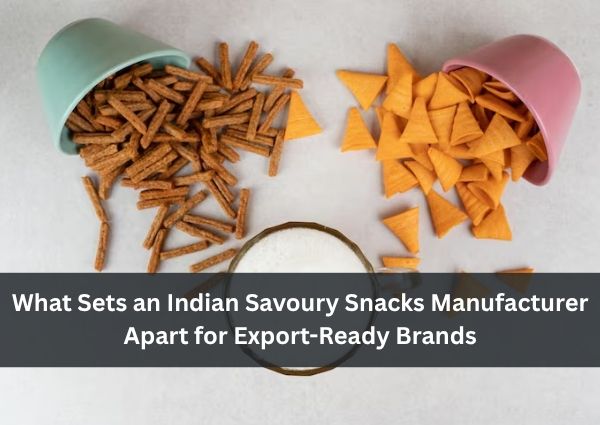
Indian savoury snacks have moved far beyond local markets. Namkeen, spiced mixtures, crunchy snacks, and regional specialties are increasingly finding consumers across international markets. For brands planning global expansion, however, producing a tasty product is only one part of the journey.
Export-focused businesses need manufacturing systems capable of delivering consistent taste, dependable quality, suitable packaging, and reliable production volumes. At Anantjeet Nutriments, understanding these requirements helps brands prepare snack products for wider markets while preserving the flavours and textures consumers expect.
Consistent Quality Across Production Batches
One major requirement for export-oriented brands is batch consistency. Products travelling to different markets should maintain similar taste, texture, appearance, seasoning, and overall quality.
Consistency begins with controlled ingredient sourcing and continues through mixing, cooking, seasoning, cooling, and packaging. Standardised processes reduce unwanted variations between production runs.
For growing brands, this reliability becomes particularly important because inconsistent products can affect consumer confidence and distributor relationships.
Strong Quality Control Systems
International expansion places greater responsibility on manufacturers to maintain structured quality control systems. Raw materials, processing conditions, finished products, packaging, and storage require regular monitoring.
Quality checks can help identify variations before products enter distribution. Manufacturers also need organised procedures for hygiene, handling, documentation, and traceability.
Anantjeet Nutriments focuses on systematic production practices that help businesses maintain dependable product standards while scaling their operations.
Understanding Export Packaging Requirements
Snacks intended for distant markets may spend more time in transportation and storage than products distributed locally. Therefore, export packaging becomes an important consideration.
Packaging must protect savoury snacks against moisture, oxygen, physical damage, and external contamination. Appropriate material selection and sealing performance can help preserve freshness and texture during transportation.
Pack dimensions should also support efficient cartons, storage, and distribution. Brands must additionally consider market-specific labelling requirements before finalising packaging designs.
Managing Product Shelf Stability
For export-ready products, shelf-life management is essential. A snack may perform well in nearby retail distribution but face different conditions when transported over longer distances.
Ingredient quality, moisture control, oil quality, processing conditions, cooling, packaging barriers, and storage can influence product stability. Manufacturers must evaluate these factors carefully when preparing products for extended distribution.
Suitable testing and controlled production help brands understand how products are expected to perform throughout their intended commercial life.
Preserving Authentic Indian Flavours
Global expansion does not mean removing the characteristics that make Indian snacks distinctive. Authentic spice profiles and familiar textures can become important selling points in international markets.
Manufacturers need to maintain traditional flavour identity while ensuring that recipes can be reproduced reliably at commercial scale. Precise seasoning measurements and controlled processing help achieve this balance.
Brands may also adjust spice intensity or product formats according to their target consumers while preserving the core identity of the snack.
Production Capacity for Growing Demand
Export opportunities can create sudden increases in order volumes. Manufacturers therefore need scalable production capacity that can support growth without compromising product standards.
A brand may initially test a product in one overseas market and later expand into multiple regions. Manufacturing systems should be capable of responding to this growth through organised scheduling, raw material planning, packaging coordination, and production management.
Scalability gives businesses greater confidence when building relationships with distributors and retail partners.
Reliable Ingredient Sourcing
Consistent products depend on consistent ingredients. Variations in spices, flour, potatoes, pulses, edible oils, and other materials can influence taste, texture, colour, and processing performance.
Manufacturers should establish dependable sourcing practices and inspect materials before they enter production. Proper storage is equally important for maintaining ingredient quality.
Reliable sourcing becomes particularly valuable when brands require repeated production over extended periods.
Supporting Product Customisation
Different international markets can have different preferences. Consumers may respond differently to spice levels, portion sizes, flavours, textures, and packaging formats.
A flexible manufacturer can work with brands to refine products according to market positioning. Trial production and sample evaluation can help businesses finalise specifications before larger commercial runs.
This flexibility allows brands to adapt without losing their core product identity.
Conclusion
Export-ready snack brands require more than production volume. They need consistency, structured quality practices, protective packaging, stable products, reliable sourcing, and the ability to scale.
Through batch consistency, quality control systems, export packaging, shelf-life management, and scalable production capacity, manufacturers can help brands prepare for the operational demands of international distribution.
At Anantjeet Nutriments, combining traditional snack understanding with controlled manufacturing practices helps businesses develop products suited for broader markets. When manufacturing quality supports authentic flavours and dependable supply, Indian savoury snack brands can build stronger foundations for sustainable international growth.